The Tesla Paradox
A few weeks back, while driving to a friend’s dinner, I had a moment that summarized the AI era for me.
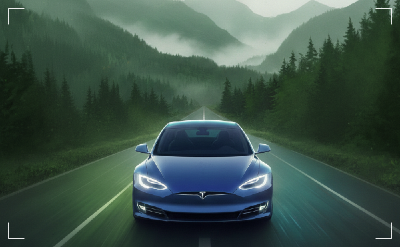
I was driving my Tesla down I-405 here in Washington. It was drizzling—classic Pacific Northwest weather—and I had the Full Self-Driving (FSD) engaged. The car is incredible; it sees things I don’t and calculates physics in milliseconds. Suddenly, the car chirped. It saw an opening in the fast lane and wanted to execute a rapid lane change to save us exactly two minutes of arrival time.
That is Smart. The machine optimized for time and efficiency.
But in the backseat, my daughter was in the middle of a story. She was telling me about something difficult happening at school, her voice quiet and vulnerable. If I had let the car jerk into the fast lane, the G-force and the noise of the blinker would have broken her flow. It would have snapped us out of the "bubble."
I canceled the lane change. We stayed in the slow lane. We arrived late, but she finished her story.
In that moment, the car was the smartest thing on the road. But it wasn't Wise.
The Global Relay
To understand where we are going, we have to look at where we came from. In my first post, Rise of AI, I talked about the "Blind Men and the Elephant." We often make the mistake of looking only at part of the picture. To understand the objective truth, we must assemble the smaller pieces/nuggets of puzzle/data to build the complete picture.
Human progress was never a solo sprint by one continent, country or civilization; it is a relay race. Centuries before the Industrial Revolution, the foundations were laid by a thousand minds across globe:
- The Logic and Math of Reality: Long before Silicon Valley, ancient India laid our digital foundations. Pāṇini built the formal grammar for Sanskrit—the same logic that now powers the syntax and compilers of every modern programming language. Meanwhile, mathematicians like Aryabhata and Brahmagupta gave us the concept of Zero, the Decimal System, and the roots of Algebra.
- The Framework of Reason: Ancient Greece provided the blueprints of logic and philosophical inquiry through thinkers like Plato and Aristotle. Centuries later, the rediscovery of these ideas ignited the European Renaissance and the Enlightenment, fundamentally shaping modern democratic thought.
- The Engines of Trade: China gave us Paper, the Compass, and Printing, while the systemic governance and meritocracy of the Mongol Empire under Genghis Khan created the trade networks that allowed these "Bits" of knowledge to travel across the globe.
- The Architecture of the Modern Era: The West forged the physical reality of our current world. The Scientific Revolution and the centuries that followed brought groundbreaking discoveries by visionaries like Isaac Newton, Marie Curie, Nikola Tesla, and Albert Einstein—transforming theoretical physics into the harnessed energy, electricity, and engineering that power our lives today.
- The Network of Consciousness: While some built the physical infrastructure of the modern era, others mapped the deepest network of all: human consciousness. From the Buddha to Gandhi, to the Dalai Lama and Martin Luther King Jr., they proved you can move entire nations without the force of laws, weapons, or physical technology. They tapped into a shared consciousness—a silent, wordless connection that binds humanity together. This was our first true "Wisdom" technology, proving that the highest form of influence requires no wires at all.
As this global knowledge converged, it met a specific kind of friction in Europe. The Protestant Reformation broke the monopoly on thought, and the Enlightenment sparked a quest for how we should live and govern.
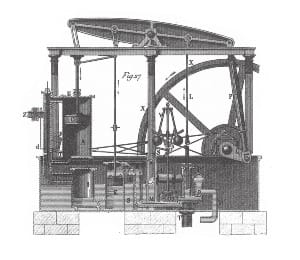
However, the practical fruits of that era—advanced firearms, industrialized warfare, and the Steam Engine—became weapons of inequality. They concentrated physical and military power, leading to a period of colonialism that dismantled indigenous structures across Africa, Asia, and Latin America. We have to be honest about that history; the systemic imbalance and suffering of that era still inform the structural inequalities of our world today.
Is the AI era any different?
We are standing at the dawn of a new era—the Intelligence Revolution—and for the first time in history, the most powerful tool ever invented is not locked in a factory or reserved for a king. It is available to anyone with an internet connection and the price of a few coffees ($20).
This is a global leveling of the playing field. Whether you are a student in a remote village in India, an entrepreneur in São Paulo, or a researcher in Berlin, you have access to the same "brain." This technology can be a binding force for humanity, allowing us to combine our strengths—science, arts, and philosophy—to solve problems that were previously in the realm of fiction.
The Clash of Atoms and Bits
However, we are currently living in a "split reality." On our screens ("Bits"), everything moves at light speed. We can generate code, art, and strategy in seconds. But in the physical world ("Atoms"), things still move at the speed of bureaucracy.
I am feeling this clash personally as I build a home here in Washington State. In the digital world, I can use AI to design a structurally sound floor plan in seconds. In the physical world, I have to navigate septic permits, critical area designations, and steep slope exceptions.
I sometimes joke that it would be easier to pull your own teeth out without anesthesia than to navigate the civil engineering and permitting requirements of the county. It takes weeks or months for a human to review what an AI could verify in milliseconds.
AI will eventually transform this. We will see a deflationary future where "Smart" agents handle the bureaucracy, with a human in the loop to provide guidance, lowering the cost of housing and services for everyone. But right now, Gemini 3 can write a sonnet, but it cannot negotiate with a county clerk. It fails at the messy reality of the physical world. And paradoxically, that is a good thing.
The Power of Higher Purpose
here is a quote often attributed to Nikola Tesla: "Man is born to work, to suffer, and to struggle, and he who does not must perish." Right now, the world is trying to sell us a "frictionless" life of abundance and Universal Basic Income. The narrative is that AI will allow us all to simply do less.
I am asking you to do the exact opposite.
I am using the power of AI not just for small tweaks, but to seriously tackle the boring stuff—all those repetitive, soul-crushing tasks—so I can actually make a life-changing move. The real, game-changing benefit of AI isn't just getting an extra coffee break; it’s the massive leverage it provides. That leverage is the key to clearing out my headspace and my schedule, freeing me up to chase my true calling.
For too long, the professional world has been obsessed with "efficiency," often trapping us in necessary but ultimately unfulfilling roles. Stepping away from the efficient and toward the meaningful felt risky at first. It requires what I call "Micro-dosing Bravery": the constant, tiny acts of courage needed to consciously move away from what is easy and expected, and move firmly toward what is deeply authentic.
This shift isn't just about personal fulfillment; it is where real influence and a lasting legacy begin to grow. My goal is to use AI to strategically win back my time—not for idle chilling, but for the focused pursuit of my genuine passion.
The Takeaway
We are the first generation to hold this kind of power. We are the Architects, Netizens, and Fellow Travelers of this new age.
We don't need to be taught how to be wise—we already make these choices every day, like choosing the slow lane when the conversation is too good to end. AI may become the engine, but we are the navigators. The real value we bring isn't in how fast we can run, but in the Direction we choose to set:
- If you are a Lawyer: You can now research 50 cases in the time it used to take to research one. But the AI can't tell you which argument will resonate with a jury’s sense of justice. That’s Wisdom.
- If you are a Doctor: You can use these tools to diagnose edge cases that would have stumped you before, potentially saving lives without burning out. But the AI cannot hold a patient's hand and give them hope. That’s Wisdom.
- If you are a Teacher: The era of making kids memorize dates and facts is over. The facts are in their pockets. Your job now is to build their confidence, to show them how to think, not what to remember. That’s Wisdom.
- Students now have the greatest power in human history. You can achieve what Steve Jobs, Marie Curie, Nikola Tesla or Aryabhata achieved, but at a much faster rate. You can influence the world faster than Buddha, Confucius, Gandhi, or Nelson Mandela. Your ideas can travel wider than those of Adi Shankara, Plato, Aristotle, or Dōgen.
Use these tools to remove the drudgery, delegate the tedious processes, but never outsource the Judgment and Outcome.
Enough thinking. It’s time to move.